Intro
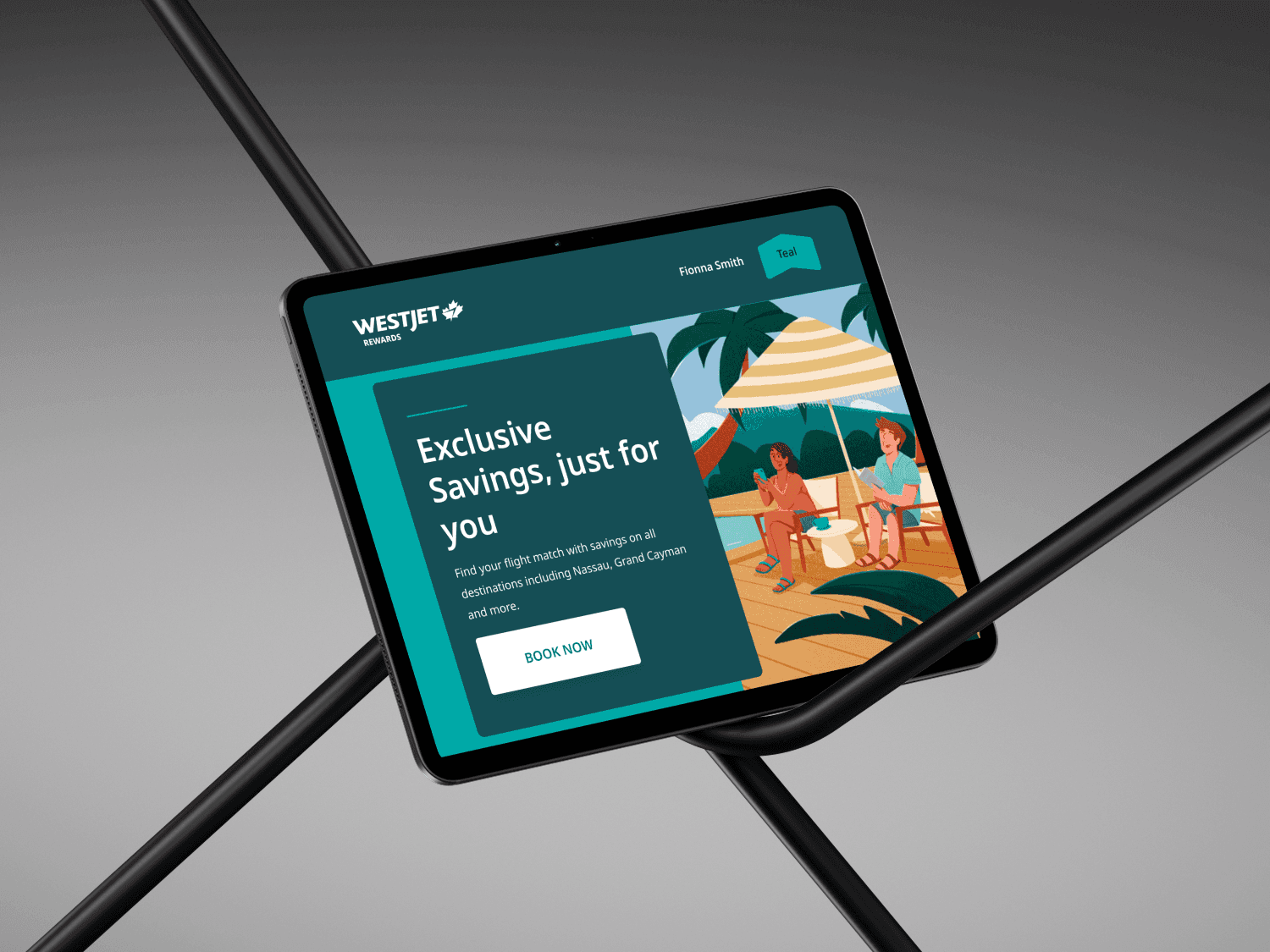
I redesigned WestJet’s baggage feature in their digital check-in flow with the goal of serving up personalized pricing information to help travellers purchase checked bags before arriving at the airport.
3.2%
Increase in paid baggage attachment during check in
$961k
Estimated revenue increase in the first 8 months
Year
/
2023
Client
/
WestJet
The challenge
Too much cognitive load and a lack of clarity
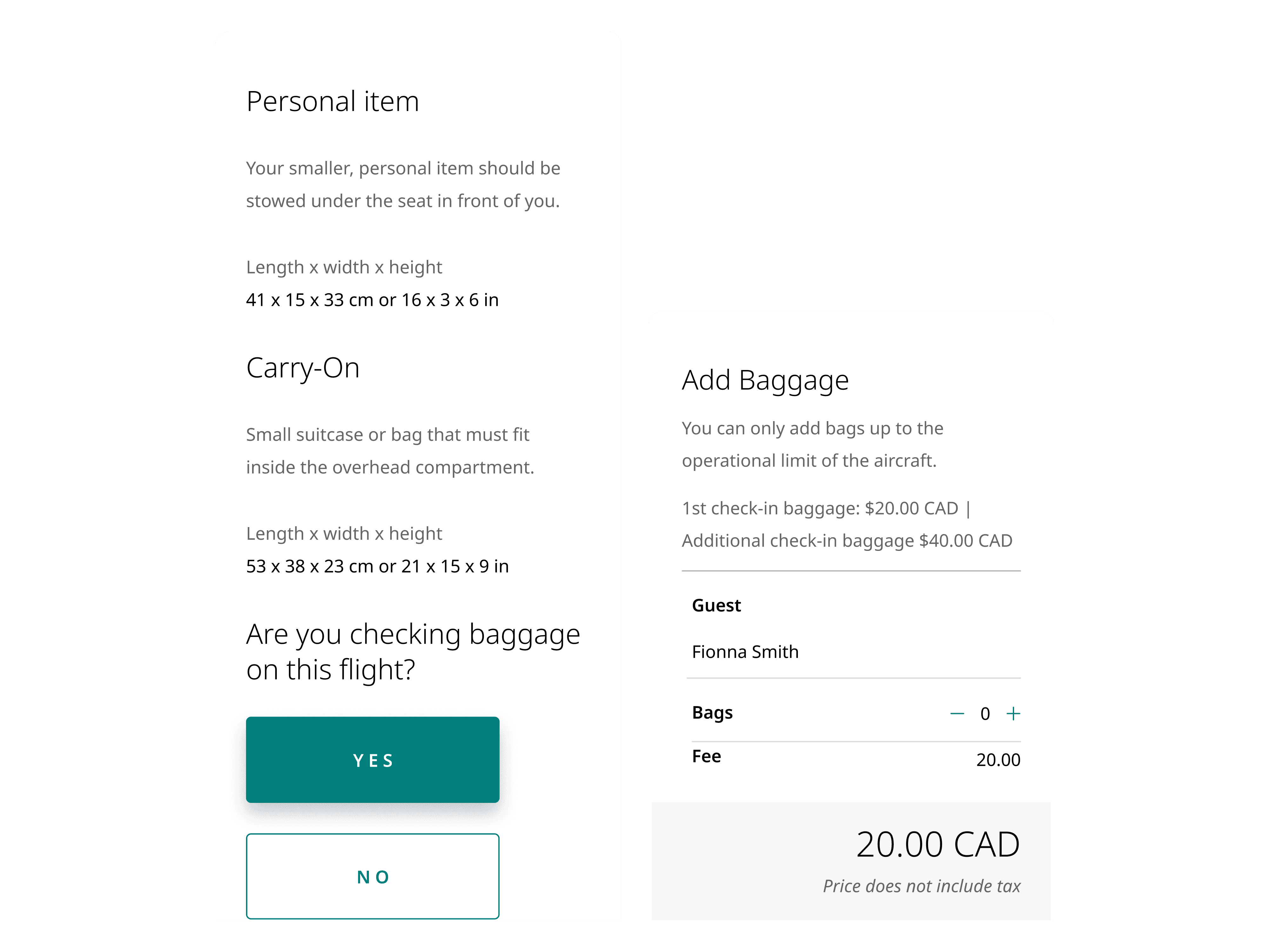
Checked baggage requirements appear on a separate page from the one in which guests add and pay for checked bags, requiring users to remember information they can no longer see. (Fig 1)
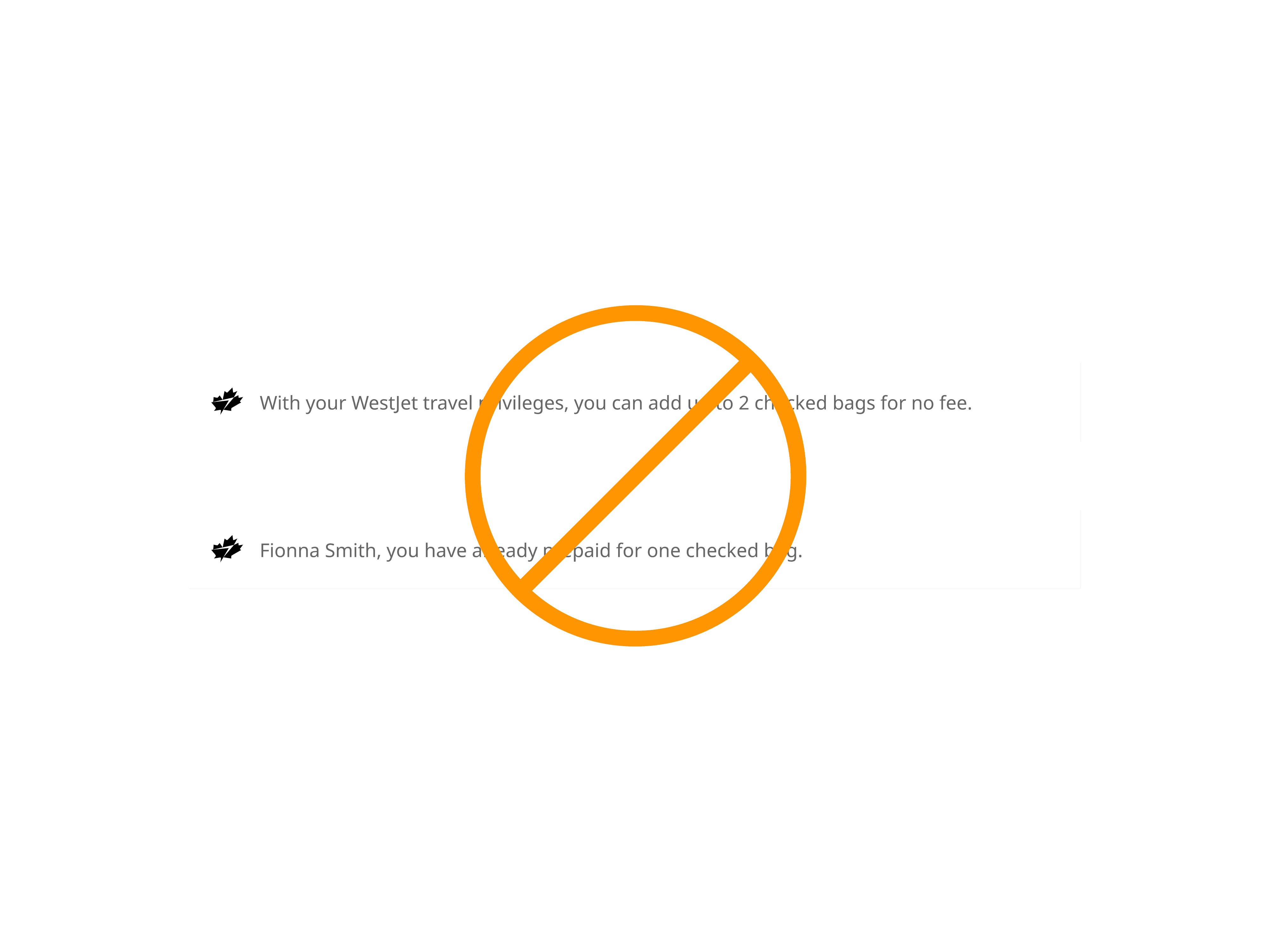
Additionally, baggage pricing information is generic, and isn’t dynamic when a guest is eligible for free bags. This leaves guests confused about baggage pricing and requirements and deters them from purchasing checked bags in the first place. (Fig 2)
(Fig. 1)
(Fig. 2)
The solution
Simplify, focus and personalize
I had to find a way to merge two pages without overwhelming the user, as well as display dynamic baggage pricing information that is unique to the individual user. My goal was to strip away clutter and create an interface that would make users feel confident in their decisions.
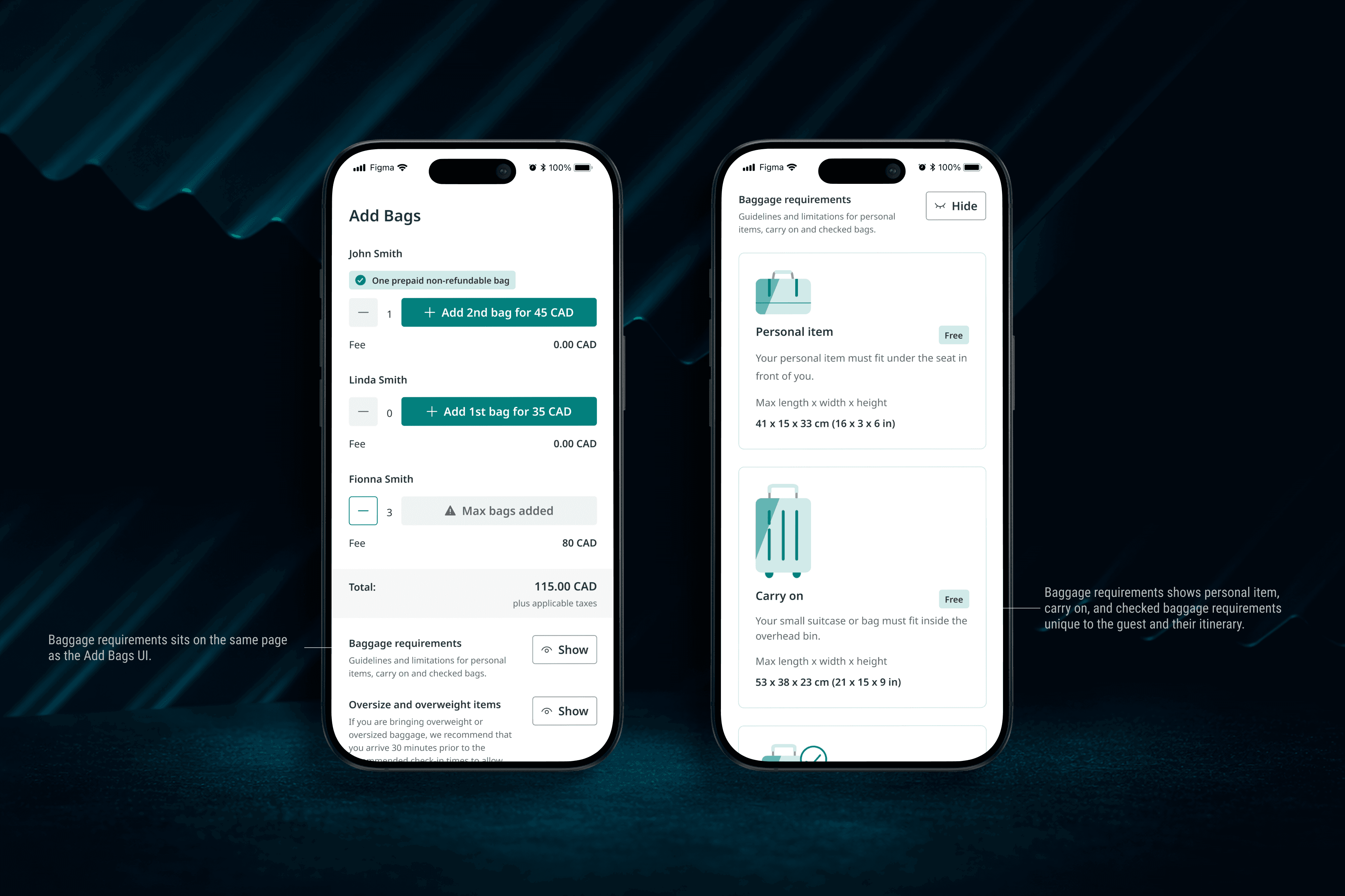
1. Merging information
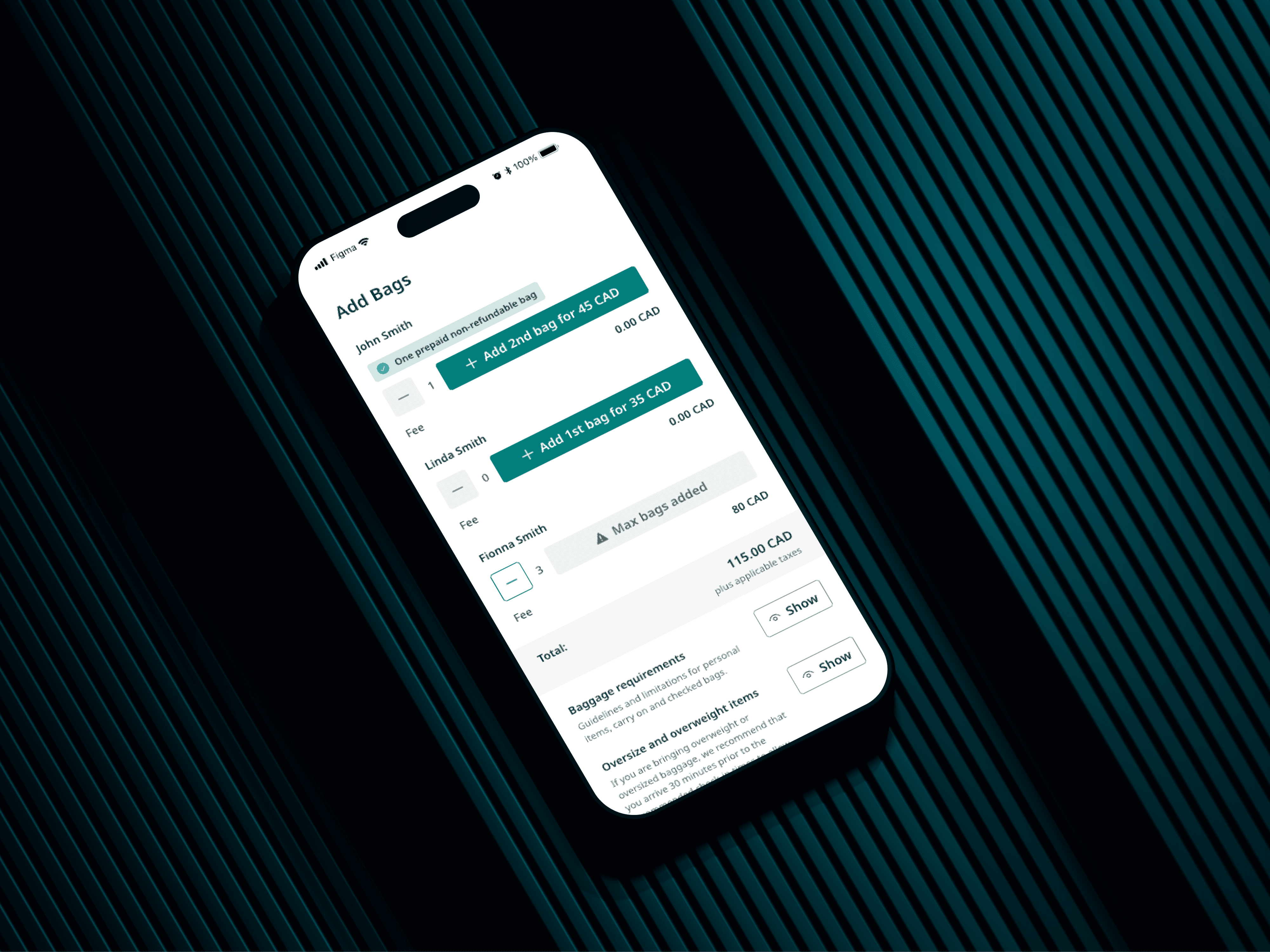
I merged the previously separate "Baggage Requirements" page and "Add Baggage" page into a single page by adding baggage weight and dimension requirements into a collapsible component that sits below the “Add Baggage” interface.
I also added baggage pricing information and created illustrations for each baggage type.
The solution cont.
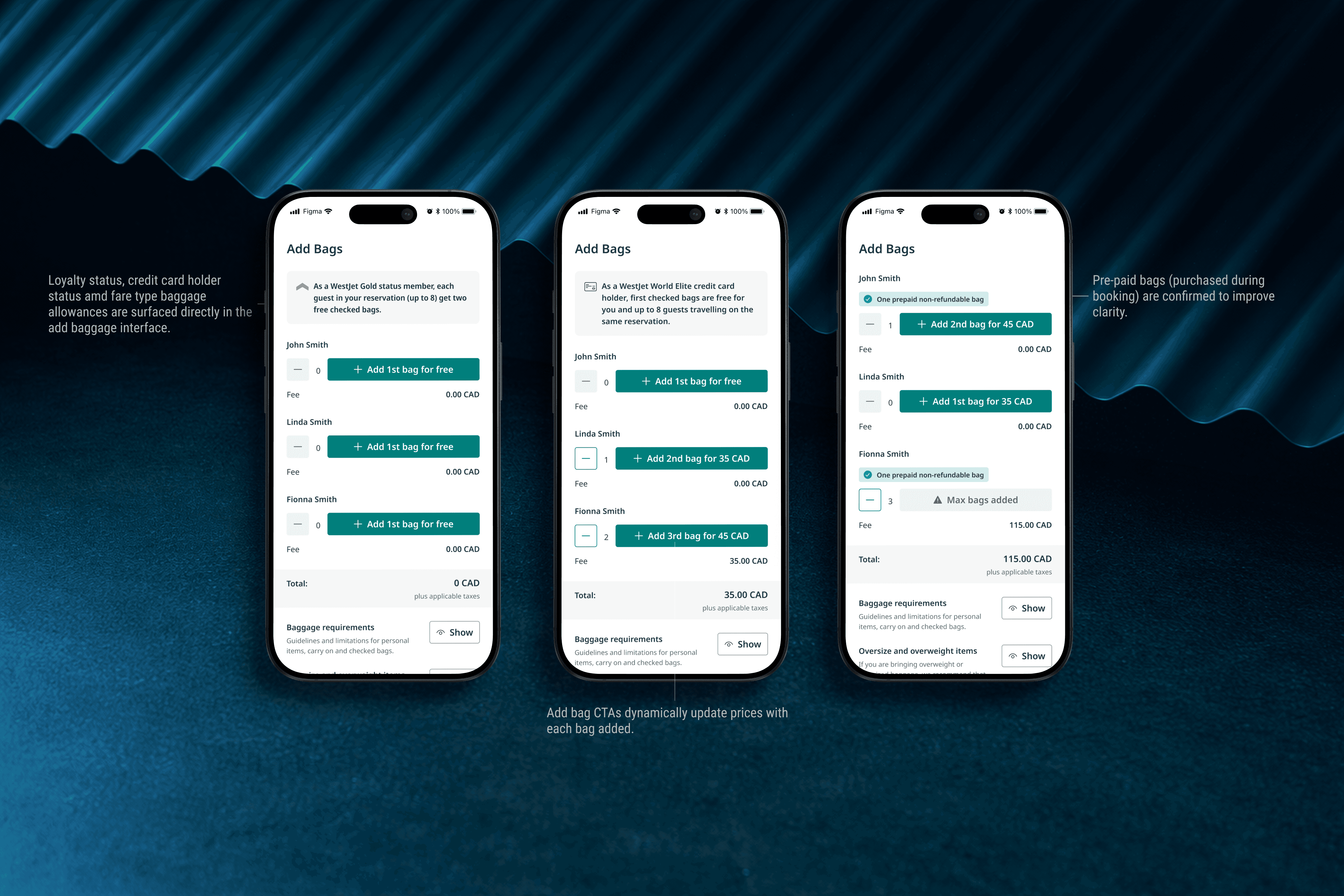
2. Dynamic pricing buttons
In order to mitigate confusion about how bag prices increase with each subsequent bag, I designed dynamic “add baggage” buttons. With each click, the price for the next bag updates within the button itself. The price is unique to each guest and accounts for free baggage benefits that come with premium fares, credit card holder status and airline status.
A/B testing post-launch estimated that this feature generated an additional $961,000 in checked baggage revenue in the first 8 months of 2024.
The process
Baseline research and testing
The dynamic pricing project was prompted by guest feedback that they were unsure whether their free and pre-paid bags were accounted for, or if they would have to add them again in the paid baggage flow.
"
I have the WestJet World Elite Mastercard which is supposed to include one free checked bag. I had to pay the checked bag fee when I checked in online. I would like to have that fee reimbursed. There should be a section when checking a bag that recognizes the card. - A credit card holder
The process cont.
A/B testing
In order to validate that anecdotal guest difficulties with the baggage flow were worth a redesign, we ran ran an A/B test with the (Fig. 1) existing design and (Fig. 2) an enhanced version with added information that we had anecdotally learned through guest feedback channels would be useful to guests. The enhanced version added copy to display baggage prices and an extra column to differentiate pre-paid bags from those the guest was adding in the flow.
The test revealed that:
1. 60% of guests mistakenly believe that they can pay for bags at the airport kiosk
2. Guests would like to see bag prices and refund information on the same page as where they add bags.
3. Including pricing information on the page where guests add bags increases satisfaction by 5.4%.
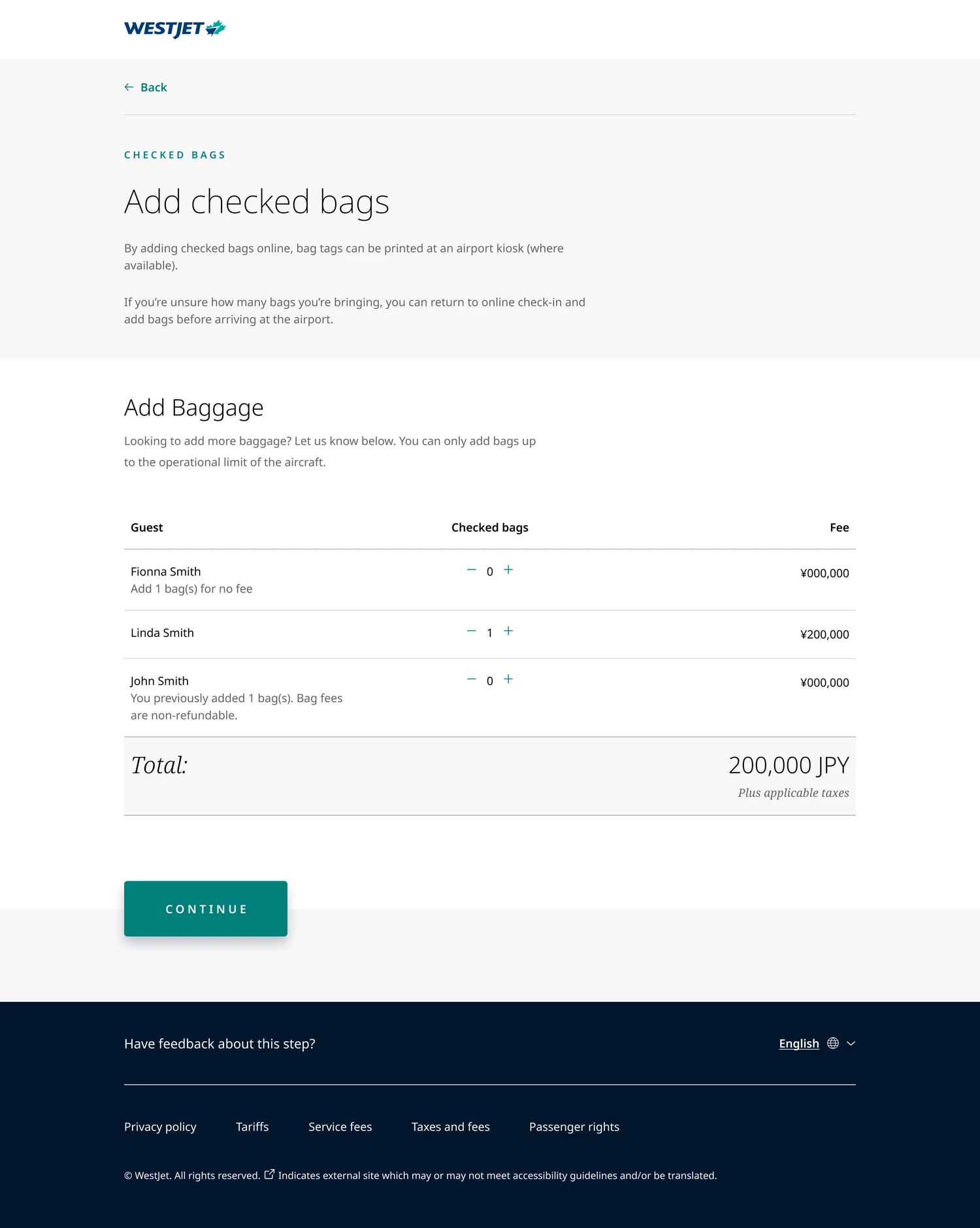
(Fig. 1)
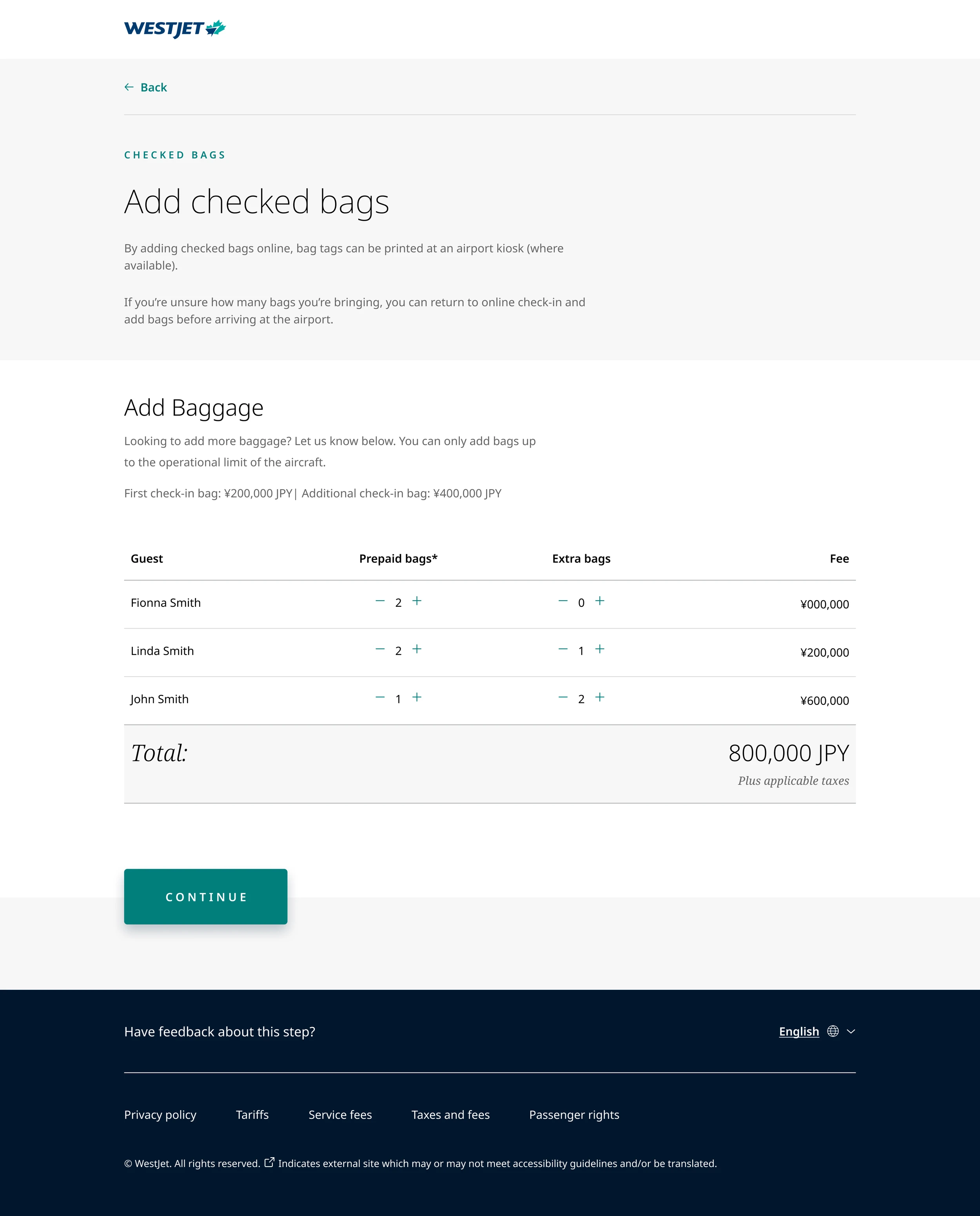
(Fig. 2)
The process cont.
Getting to know the competition
Any good redesign kicks off with a competitive analysis. Here’s a snapshot at discoveries about the paid baggage flow from competitor airlines:
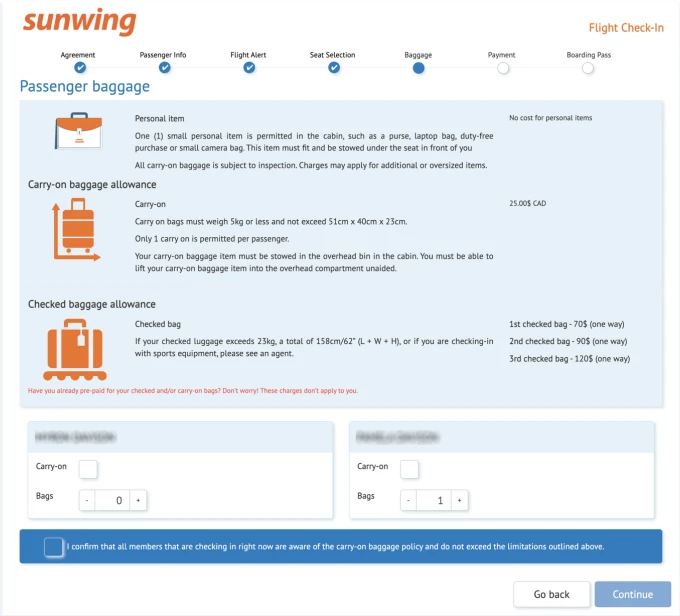
Sunwing Airlines
Sunwing uses a simple chart that details dimension requirements and fees both carry-on and checked bags in one concise view. The information is not dynamic to the user but it does call out that fees don’t apply for pre-paid bags.
Strengths and opportunities:
Concise view of baggage requirements, accounts for pre-paid bags
Weaknesses:
Text-heavy and visually boring, pricing is not dynamic
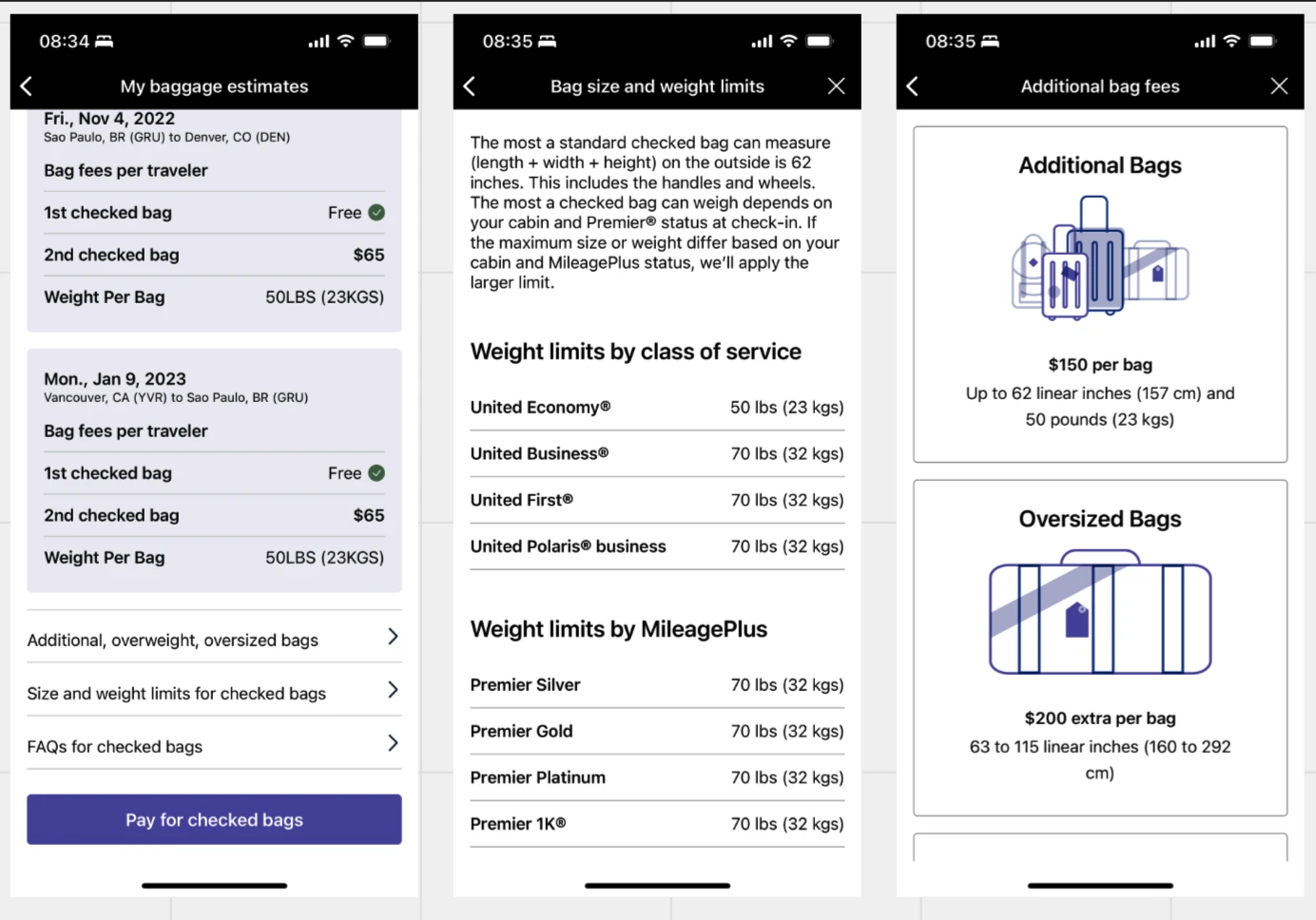
United Airlines
United Airlines clearly lays out how many checked bags are included for each passenger and what their max weight is. They also use delightful illustrations to show different baggage types.
However, United may include too much information by surfacing baggage requirements for all classes of service and tier levels, introducing confusion and potentially defeating the purpose of what would have been a very clear flow.
Strengths and opportunities:
Clear baggage allowance per passenger, appropriate use of illustration
Weaknesses:
Surfaces information that is irrelevant to the guest and their trip
The process cont.
Post-launch testing
Although usability testing showed that the dynamic pricing buttons were intuitive to use, we wanted to make sure that they were actually increasing ancillary revenue.
Hypothesis:
If we remove the baggage fees from the baggage buttons, we will see an increase to our paid and free baggage attachment rates due to the guest’s reduced anxiety surrounding the price to add checked bags.
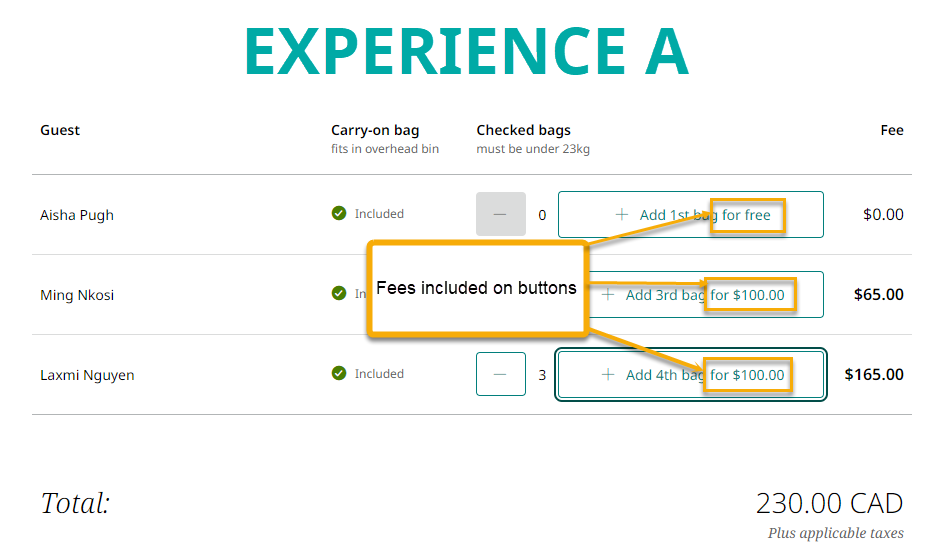
Experience A (original design/control)
Fees included within the add bags button
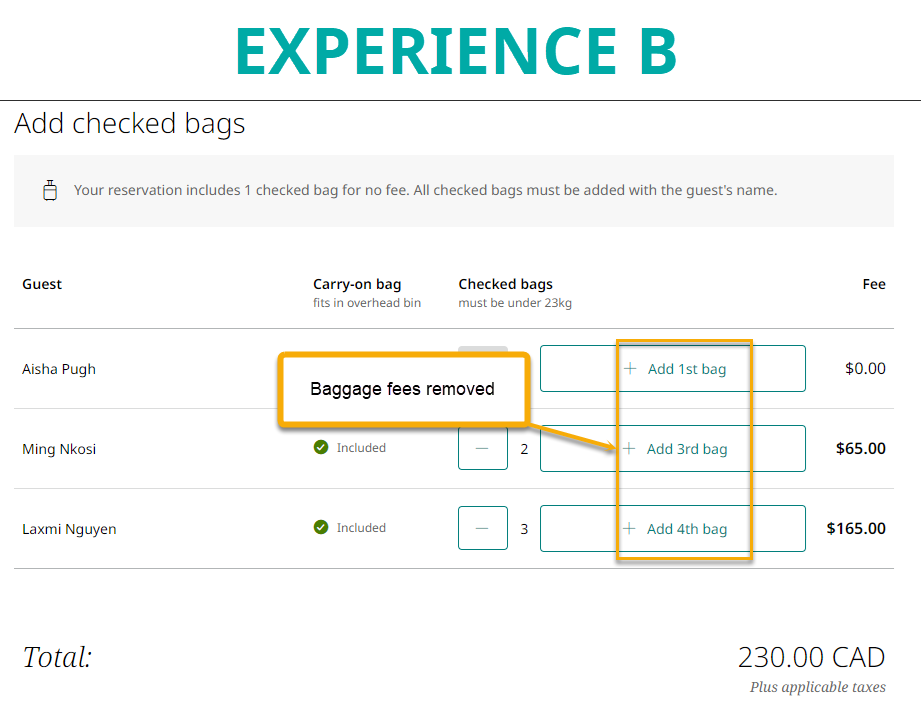
Experience B
Fees removed from the add bags buttons
The process cont.
What did we measure?
Primary Metric:
Paid Baggage Attachment Rate
Secondary Metrics:
Free Baggage Attachment Rate, Overall Baggage Attachment Rate
What were the results?
Experience B saw declines for both:
Paid (-3.2%) and free (-0.9%) baggage attachment rates with strong statistical confidence.
Considering 2023 as a baseline, experience B would yield approximately 13K fewer bookings with paid bags in 2024.
Considering the average paid bag revenue/booking of $71.50, adding dynamic baggage pricing has led to an estimated revenue of $961K on an annualized basis.
What's next?
In the next iteration of the baggage pricing flow, I will integrate special items such as sports equipment, infant/child equipment and excess baggage into the UI. This will save guests additional time by not requiring them to line up at the check-in desk at the airport, and will save WestJet costs by operating with a leaner check-in team.
It is also on the roadmap to integrate a similar view into WestJet.com so that guests without upcoming trips can accurately predict their baggage costs before they even book a flight.
Next work